BPA VR Training (Forensic Police)
VR training concept for Blood Pattern Analysis (BPA) — environment assets + realistic blood pattern workflows
Tech Stack
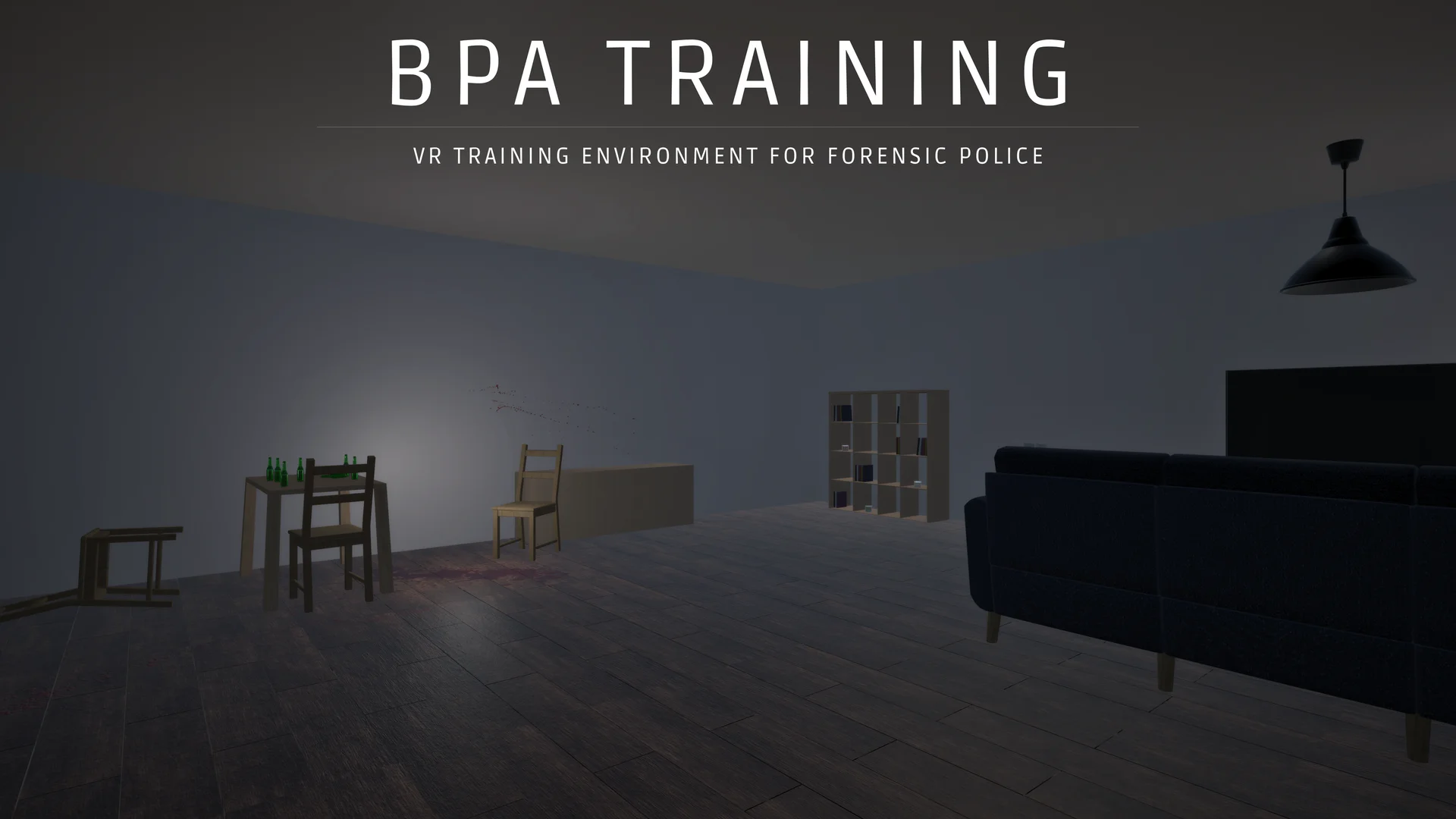
Overview
This project is a VR training environment for forensic police, focused on supporting Blood Pattern Analysis (BPA) practice inside a realistic, interactive crime scene.
The goal was to explore how VR can make BPA training more accessible for forensic trainees by enabling repeatable practice in a controlled environment—without requiring a physical training facility or complex setup.
My contributions
I contributed across both development and content creation as part of a team of 5:
- Contributed to building the VR prototype in Unity
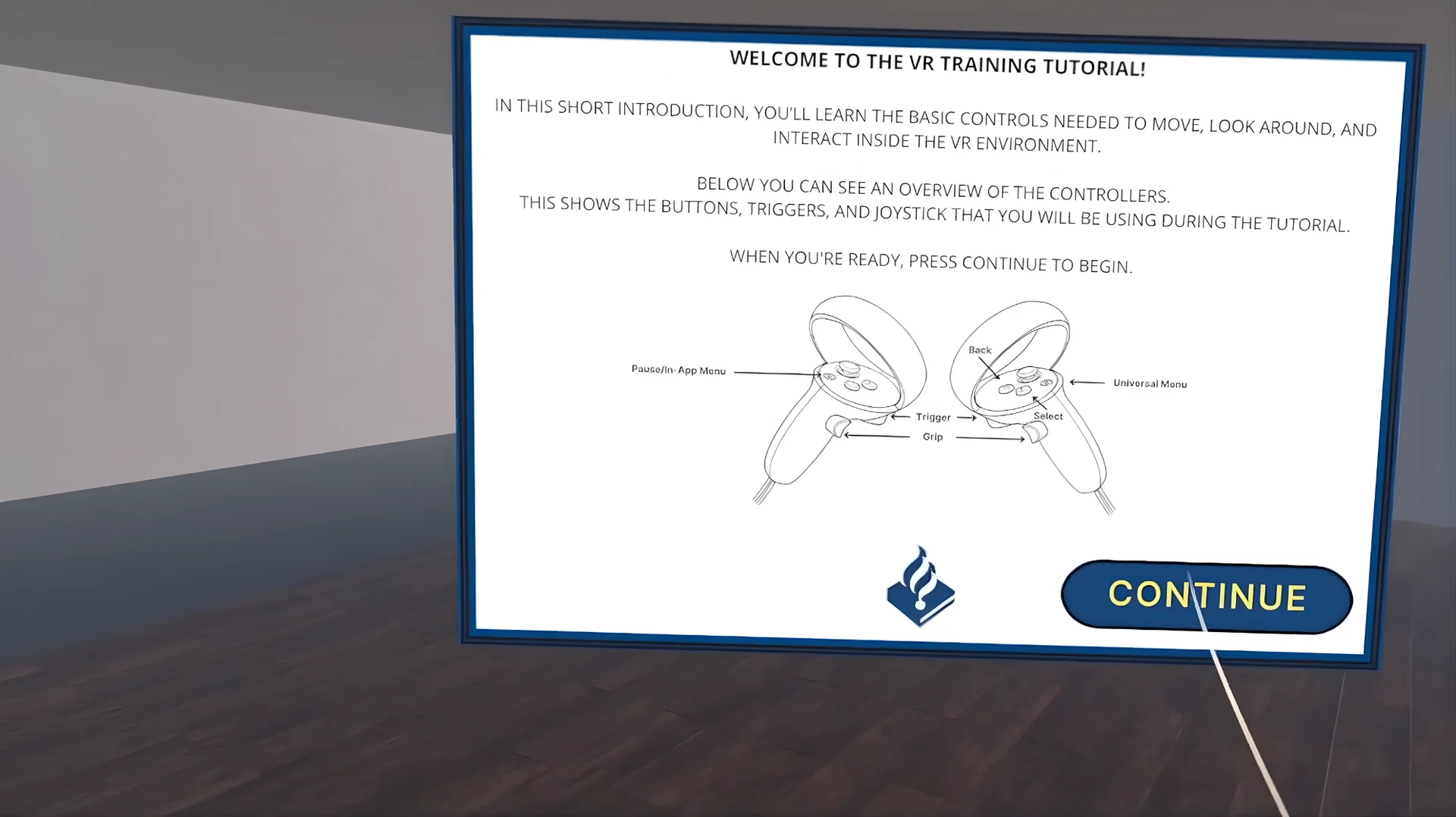
- Designed and implemented a structured tutorial flow for onboarding and pacing
- Created realistic and forensically accurate blood patterns using Substance Painter
- Modeled and prepared environment assets and props used in the training house
VR prototype (Unity)
The prototype was developed as a training-focused VR experience with a clear interaction flow and guided progression.
Tutorial flow
The tutorial was designed to help new users quickly understand the experience through step-by-step onboarding:
- Basic VR onboarding and interaction fundamentals
- Clear instruction pacing to reduce cognitive load
- Task-based progression aligned with training goals
Core technologies
- Unity
- C#
- XR Interaction Toolkit
- VR (Meta Quest)
Asset & content pipeline
- Blender (3D modeling)
- Substance Painter (texturing)
- Quixel Mixer (materials)
- GIMP (texture cleanup)
Blood pattern creation
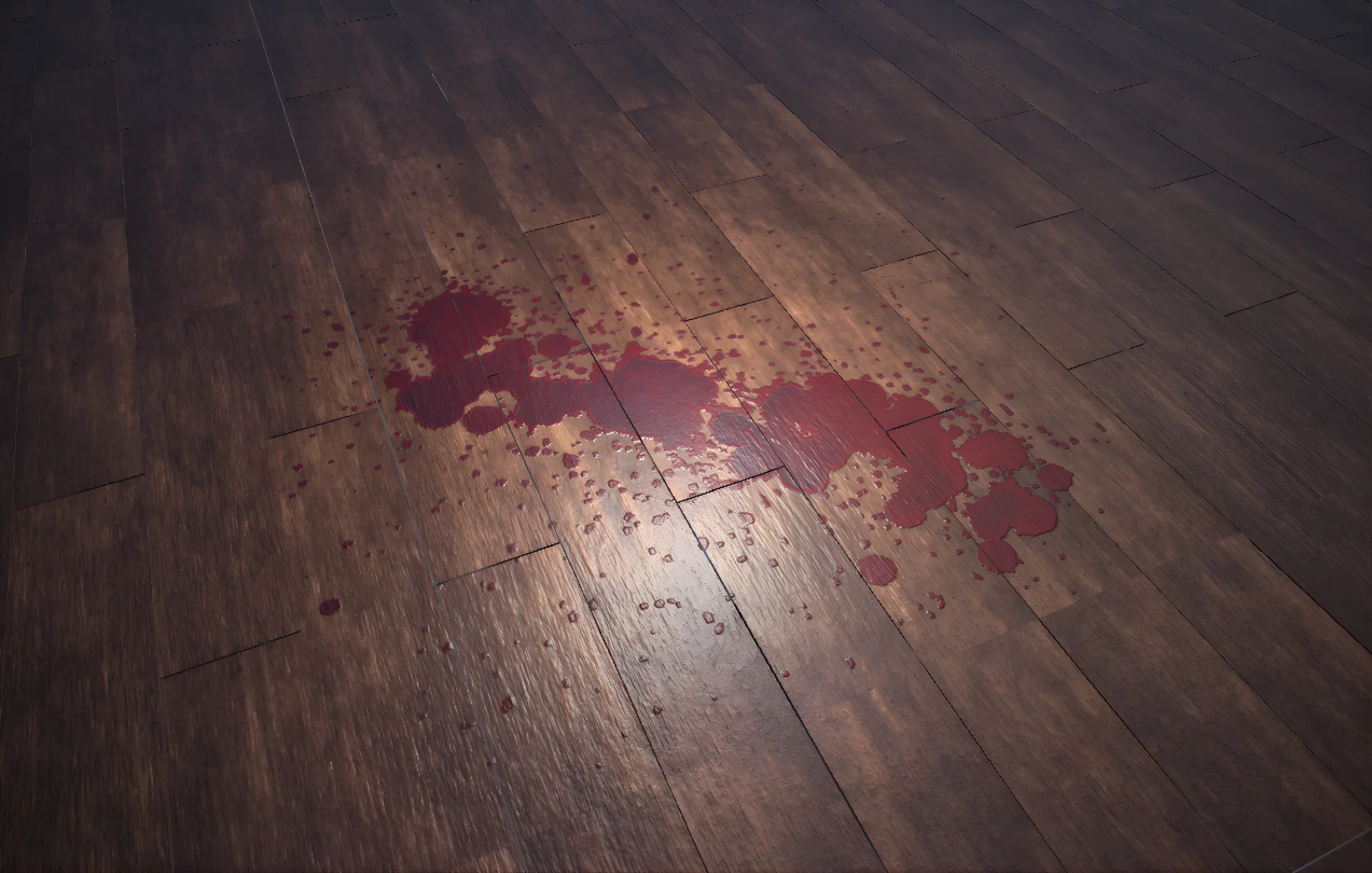
For the BPA VR training project, I worked on creating realistic blood patterns suitable for forensic training within a VR environment.
I was responsible for developing and testing a workflow where blood was painted directly onto 3D models using projection painting in Substance Painter. This approach allowed the blood to integrate naturally with surface details and materials, rather than appearing as a flat overlay.
My work included:
- Cleaning and preparing blood reference images in GIMP
- Painting blood patterns onto 3D models in Substance Painter
- Creating variation between fresh and dried blood using roughness and height adjustments
- Exporting and preparing finalized assets for use in Unity
Later in the project, the team transitioned to a decal-based workflow due to its greater flexibility in Unity—making it easier to reuse, rotate, and place blood patterns during iteration. While the direct-on-model approach was valuable for testing visual realism, decals proved more efficient for production and rapid scene editing.
Environment asset pack (Blender + Unity)
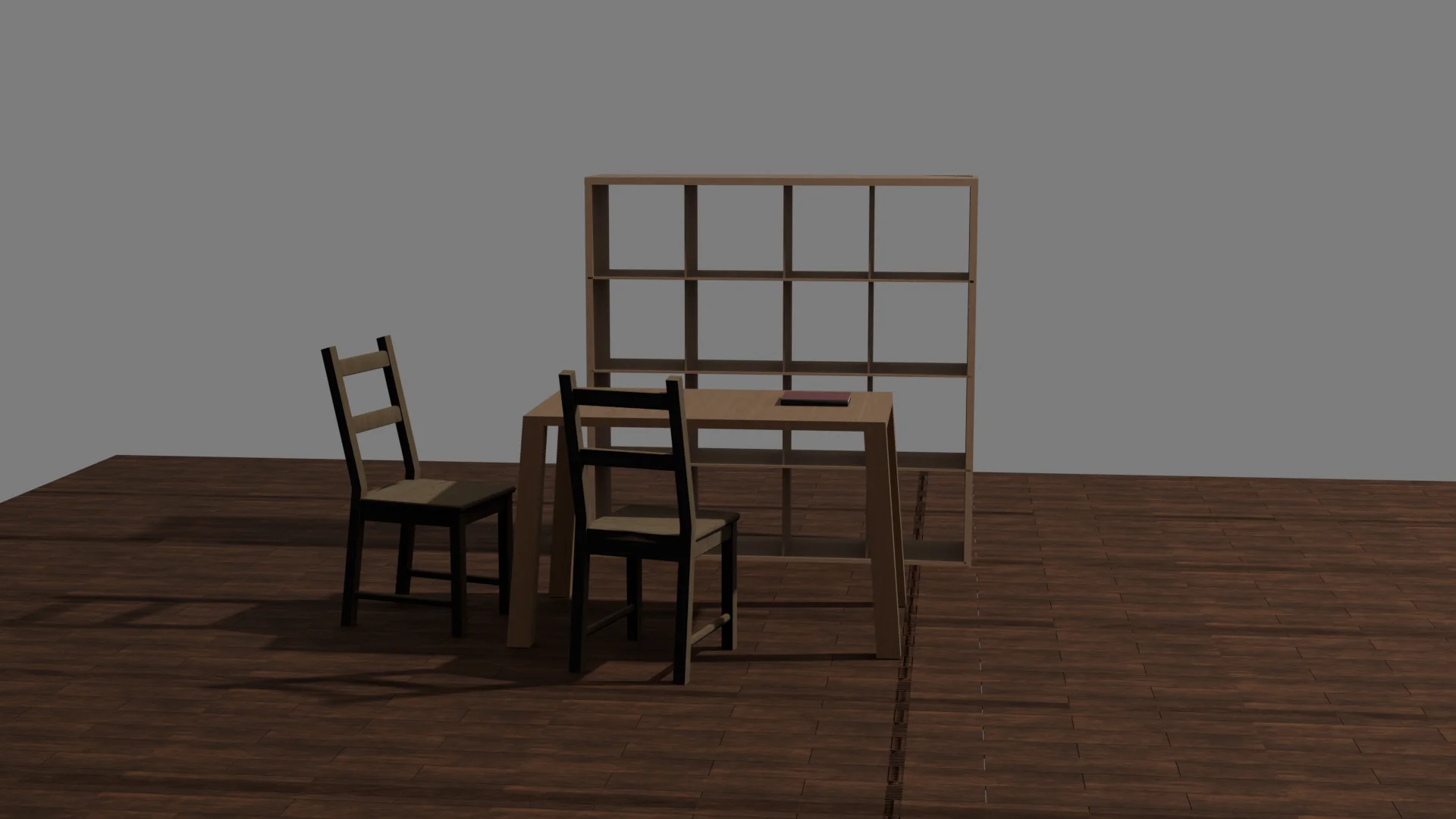
To support immersion and realism in VR, we created a custom set of environment assets for the BPA training house.
The focus was on building believable, everyday objects and surfaces that help ground the crime scene in a realistic domestic setting.
Team & timeline
- Team size: 2 modelers
- Production time: 3 weeks
- Focus: crime-scene environment and surface materials
My contribution
I modeled and prepared the following assets:
- Table
- Closet
- Chair
- Shelf
- Pillow
- Book (multiple color variants)
- Candle (multiple color variants)
- Floor surfaces
- Laminate floor material
- Kitchen tile surface
Workflow highlights
- Modeled using real-world reference images
- Built at true-to-life scale to ensure correct proportions in VR
- Created color variants to increase scene variety
- Delivered Unity-ready assets for direct integration into the project
Outcome
This project resulted in a realistic VR crime-scene training environment featuring:
- A guided tutorial experience for effective user onboarding
- Blood pattern assets designed to support BPA readability and forensic realism
- Tested workflows balancing visual realism with production efficiency
- A custom environment asset pack created specifically for the training scene